
GPFM Global Innovation Priorities In‑Depth Insight Reports Launched at COP30
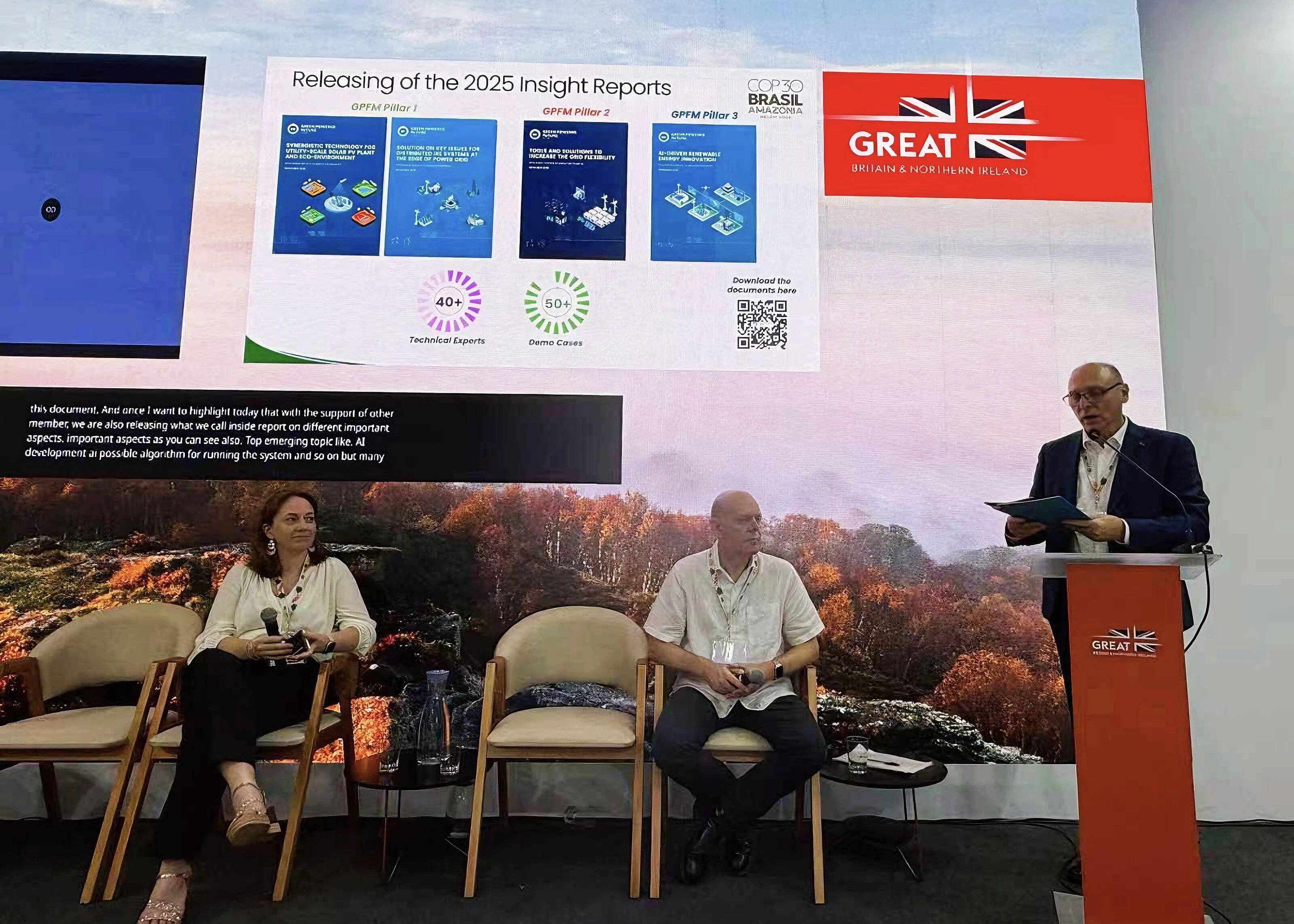
In November 2025, during the 30th Session of the Conference of the Parties to the UNFCCC (COP30) held in Belém, Brazil, the Green‑Powered‑Future‑Mission (GPFM) alliance under Mission Innovation (MI) officially released the second batch of Global Innovation Priorities In‑Depth Insight Reports (hereinafter referred to as the Insight Reports).
Led by the Chinese Secretariat of MI, this batch of reports was co‑authored by more than forty experts from key domestic research institutions including the Institute of Electrical Engineering, Chinese Academy of Sciences, and PowerChina Northwest Engineering Corporation Limited, together with experts from Italy, the United Kingdom, Spain, Australia, Canada and other countries.Conducting systematic technical reviews aligned with GPFM’s global Innovation Priorities (IPs), the Insight Reports bring together cutting‑edge international viewpoints and practical experience, compiling over fifty typical global demonstration cases. They cover key technical areas such as integrated renewable‑energy systems, AI‑empowered renewable energy, grid flexibility, and ecofriendly photovoltaic systems, aiming to accelerate feasibility research and technological innovation for clean energy.
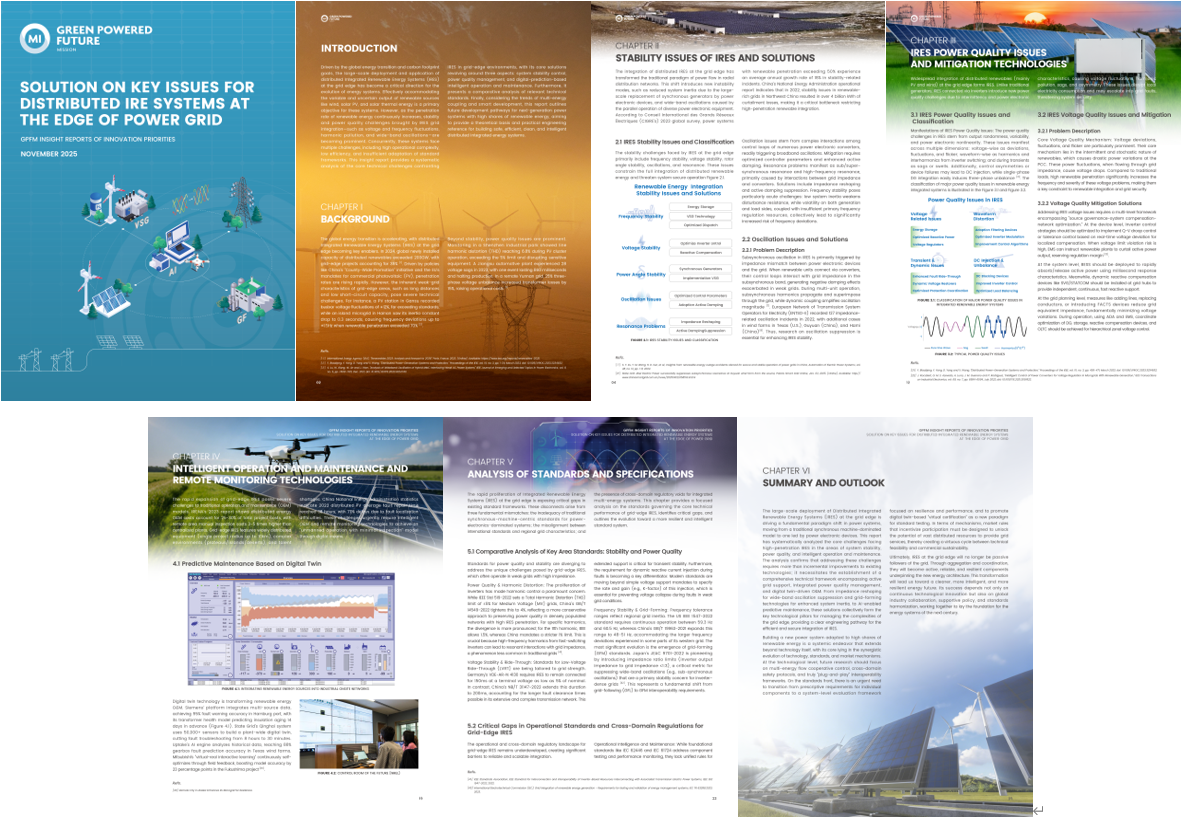
Report Overview
Solutions to Key Challenges for Distributed Integrated Renewable‑Energy Systems at the Grid Edge
‑ IP 1.3.3 Distributed IRE Generation at the Grid Edge
‑ IP 1.4.1 Isolated Power Systems with High Shares of Renewable Energy
‑ IP 1.6.4 Renewable‑Energy Stability Assessment and Mitigation Measures
The report systematically sorts out typical challenges and demonstration cases of distributed integrated renewable‑energy systems in recent years. It deeply analyzes root‑cause mechanisms behind critical technical risks including oscillation, resonance and frequency instability, and puts forward cutting‑edge innovative solutions such as impedance reshaping, supplementary damping, virtual inertia and multi‑energy coupling control.It covers multiple dimensions including comprehensive power‑quality governance, intelligent operation & maintenance, and comparative analysis of standard systems. Drawing on world‑wide demonstration cases such as Yushu (Qinghai) and Hami (Xinjiang) in China as well as the European eFORT project, it fully presents state‑of‑the‑art technical progress and practical application outcomes.
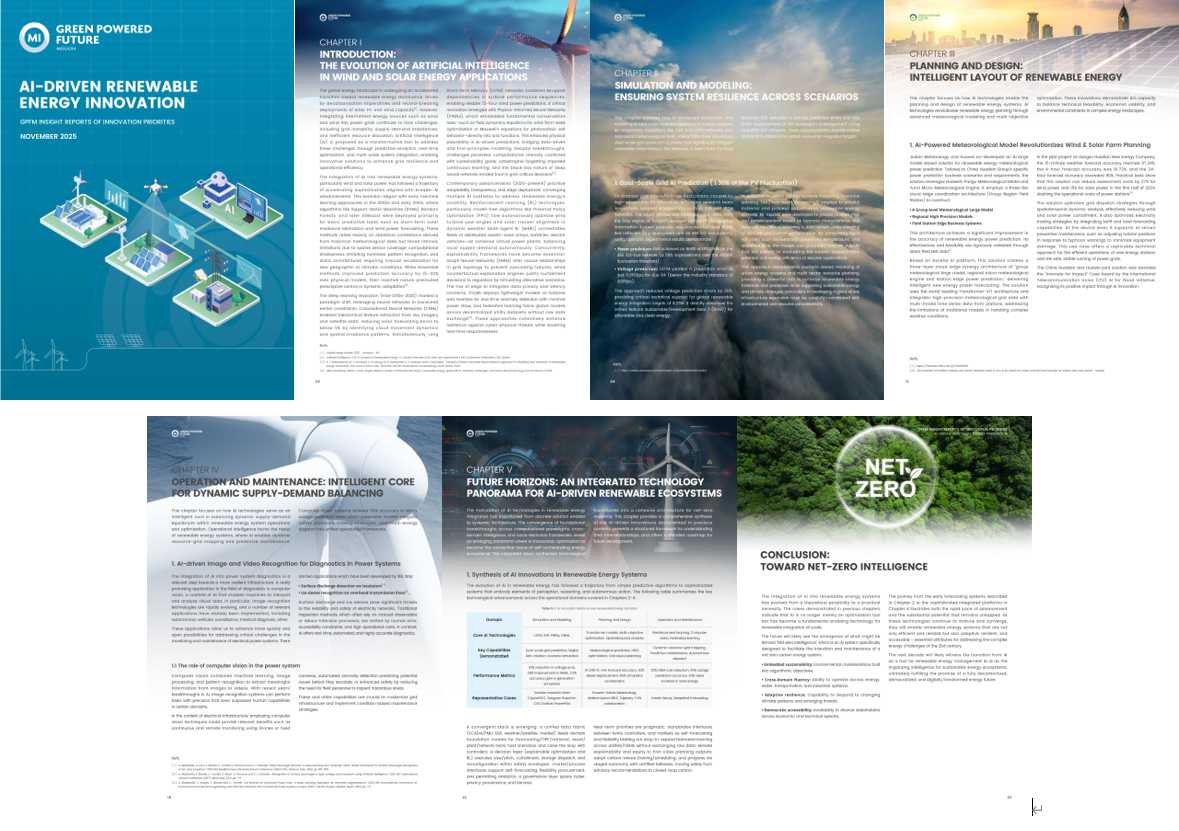
AI‑Driven Innovation for Renewable Energy
‑ IP 3.2.7 AI‑enabled Innovations & Tools for Power Systems
‑ IP 3.2.8 Digital‑twin Technologies for Asset Maintenance and Grid Monitoring
‑ IP 3.3.2 Interconnected Data Platforms for Improved Forecasting and Flexible Operation
The report reviews breakthrough advances in AI‑driven renewable‑energy innovation, highlighting core application outcomes within wind and photovoltaic sectors. Focusing on the coupling innovation between physics‑informed neural networks and fluid‑dynamics equations, it quantifies optimization gains for wind‑farm operation and corresponding improvements in energy‑capture efficiency.It also summarizes field‑deployment outcomes of edge‑AI on power‑electronic equipment such as inverters. With global real‑world cases, it generalizes the overall evolution trend of AI technologies: shifting from scattered forecasting tools toward integrated systems spanning simulation, planning, design and operation‑maintenance.
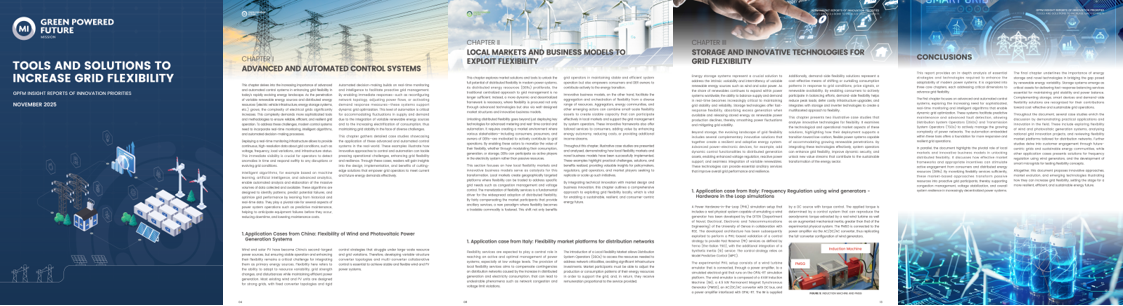
Tools and Solutions for Enhancing Grid Flexibility
‑ IP 2.1.1 Contribution of VRE Flexibility to Generating Capacity
‑ IP 2.3.4 Tools & Methodologies for DSO‑Oriented Flexibility Management
‑ IP 2.7.1 Flexible Markets for New Auxiliary Services from VRE and Energy Storage
‑ IP 2.7.4 Business Models and Regulatory Frameworks for Flexible Resources
Targeting key directions including advanced automatic‑control systems, real‑time monitoring and intelligent algorithms, local‑level markets and innovative business models, energy‑storage and demand‑side response, the report systematically summarizes multiple technical, operational and market‑oriented pathways to boost grid flexibility at both transmission and distribution levels.Drawing on global demonstration cases such as MiNDFlex (Italy) and Centricity (Canada), it comprehensively presents emerging technical routes for grid flexibility. It delivers critical references for policy‑makers, grid operators, technology developers and market participants to understand, adopt and shape grid flexibility amid the energy transition era.
Co‑Development between Large‑Scale PV Power Stations and Ecological Environment
‑ IP 1.1.5 Software and Databases for Photovoltaic Systems
‑ IP 1.1.7 Agrivoltaics Technologies
‑ IP 1.1.8 PV Ecosystems for Sustainable Development
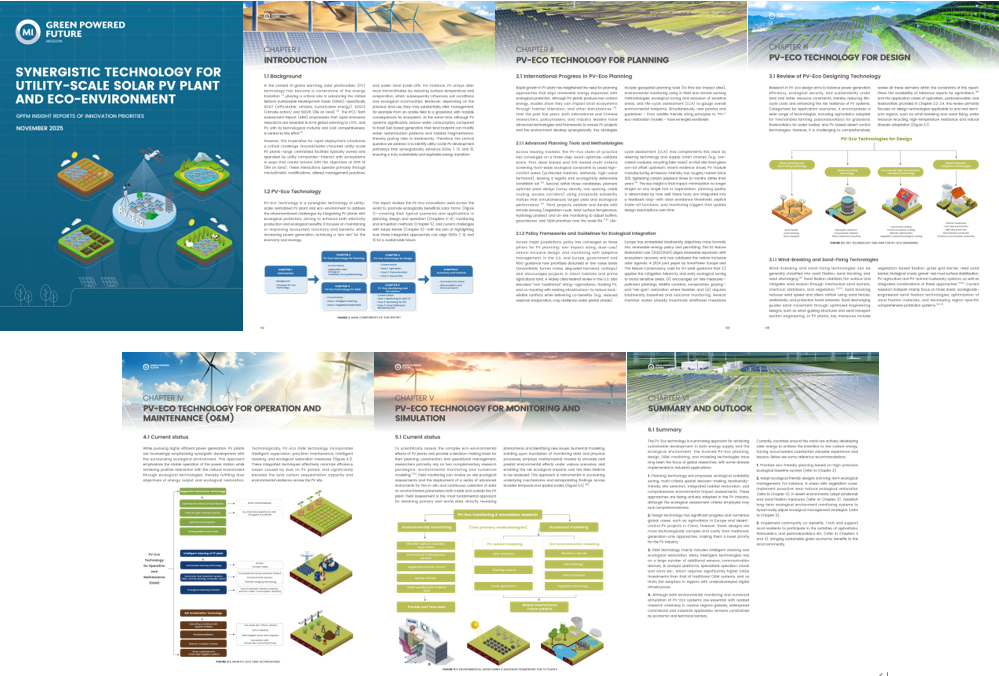
Focusing on two‑way coupling and mutual improvement between utility‑scale photovoltaic plants and surrounding ecosystems, the report systematically reviews key innovations and global status‑quo for ecologically‑compatible large‑scale PV deployment.Its scope covers collaborative planning, system design, operation‑maintenance, ecological monitoring and numerical simulation. It draws on practical scenarios including ecological‑suitability zoning on the Qinghai‑Tibet Plateau; pasture‑PV, fishery‑PV and tea‑plantation‑PV complementary modes; intelligent dust‑identification and UAV‑cleaning technologies; as well as ecological‑environment and insect‑monitoring for on‑land and floating PV stations. It provides reference pathways for renewable‑energy development in ecologically‑fragile regions.
Other News
-
MI Green Power Innovation Conference 2026–UK Workshop
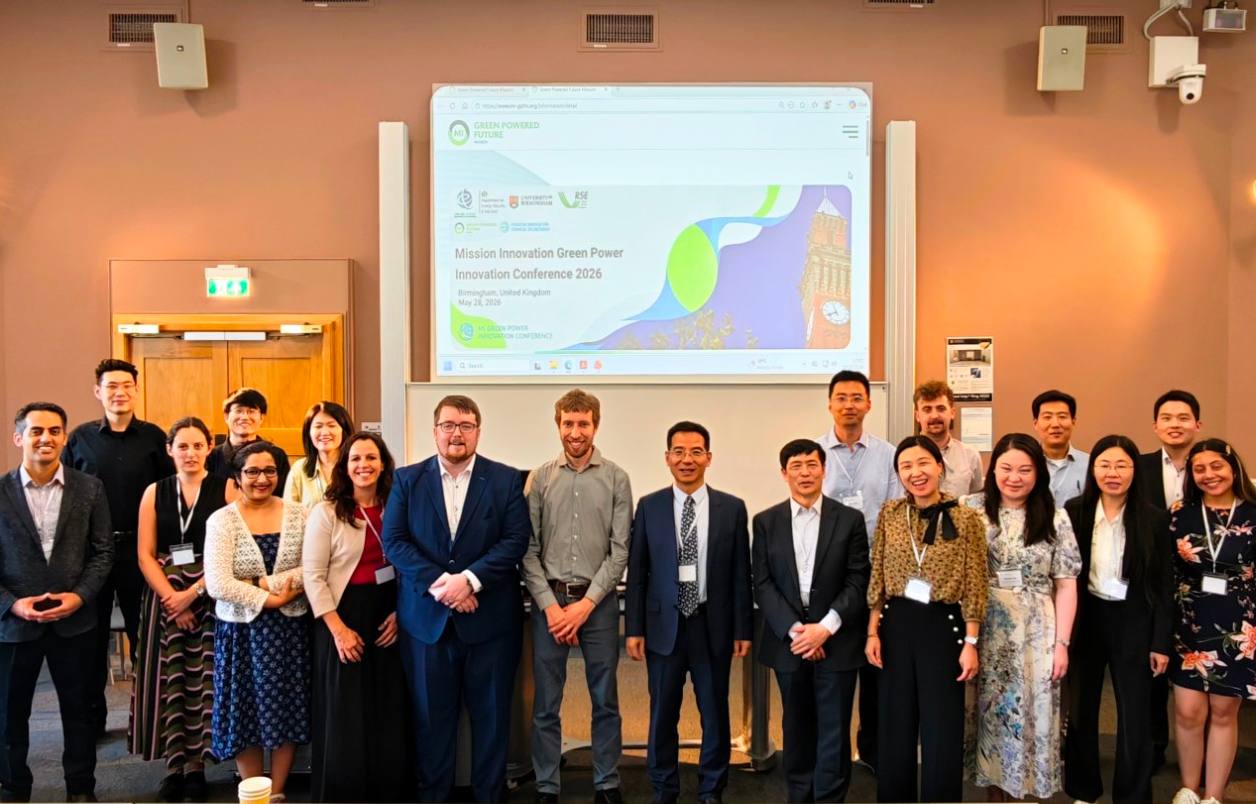
On May 27-28, the 2026 MI Green Power Innovation Conference (GPIC) UK Workshop was successfully hosted at the University of Birmingham. This event was jointly organised by the Institute of Electrical Engineering, Chinese Academy of Sciences (IEECAS), the UK Department for Energy Security and Net Zero, the University of Birmingham and Italy’s Ricerca sul Sistema Energetico S.p.A. It received co-organisation support from the MI Chinese Secretariat (MICS) and the Green Powered Future Mission (GPFM) Coalition. Over 50 representatives from governments, industrial circles, academic institutions and research bodies gathered at the workshop to conduct in-depth exchanges and discussions on collaborative approaches for green power technological innovation. Prof. Sara Walker, Director of the Birmingham Energy Institute, delivered the opening remarks.
June 12 2026
-
GPFM & CHM Joint Workshop: Advancing Power and Hydrogen Synergies through Technologies, Policies, and Global Collaboration
On 4–5 February 2026, the Green Powered Future Mission (GPFM) and the Clean Hydrogen Mission (CHM) co-organized a joint workshop on "Advancing Power and Hydrogen Synergies through Technologies, Policies, and Global Collaboration".
March 13 2026
-
The GPFM Workshop: Policy and Technology for Grid Digitalisation
The GPFM Workshop on "Policy and Technology for Grid Digitalisation" was organized by Japan's Ministry of Economy, Trade and Industry (METI) on February 18-19, 2025, which gathered representatives from international organizations, national governments, power utilities, research institutions and technology providers from Spain, Canada, Japan, Italy, the UK, Australia and South Korea.
March 13 2026